
This guide focuses on natural ingredients that calm reactive, tight, or easily irritated
skin, prioritizing a barrier first approach.
● You’ll learn what each ingredient does. You’ll find out how to pick a product that
matches your tolerance. You’ll also discover ways to reduce trial and error.
● I’ll point out common “natural” irritants, such as fragrance, essential oils, and alcohol
dominant textures.
● You’ll get a basic routine structure (cleanse, moisturize, protect) and add ons only if
your skin holds up.
● No magic promises here. Just sensible options that usually work in the background.
If your skin stings, flushes, or feels tight after washing, it’s not because you need a louder
routine; it’s because you need fewer mistakes and more support.
This guide will help you select soothing and fortifying natural ingredients, not because it’s going
to cure everything or because it’s going to give you an instant glow, but because it will help you
choose the right skin care products for your skin type and tolerance level.
Why soothing skincare starts with the barrier
Your skin barrier is like a boundary layer. It retains water and keeps irritants out. But when the
boundary layer fails, you experience fastness, tightness, roughness, redness, and the
“everything burns” phase.
Soothing ingredients affect the skin through two main pathways:
● Hydration control: pull water in and keep it there.
● Inflammation control: calm the signals that drive itch, sting, and heat.
Here’s the decision rule that saves money: when your barrier struggles, skip “more activities.”
Pick ingredients that support water balance and lipids first.
How soothing ingredients actually help
Soothing ingredients don’t “fix” skin overnight. They work in quieter ways:
● They prevent moisture from escaping, so you don’t feel so tight anymore
● They provide cushioning on the skin’s surface, reducing friction and, in turn, redness.
● They help improve the appearance of your skin after sun exposure, wind, shaving, or
overscoping.
● They reduce the likelihood of flare-ups caused by everyday stressors when your skin
comes in contact with them.
However, ingredient quality alone won’t save a messy formula. Formulation balance matters. A
great botanical still irritates if the product contains harsh surfactants, heavy fragrance, or a
high alcohol base.
Natural ingredients that calm skin without drama
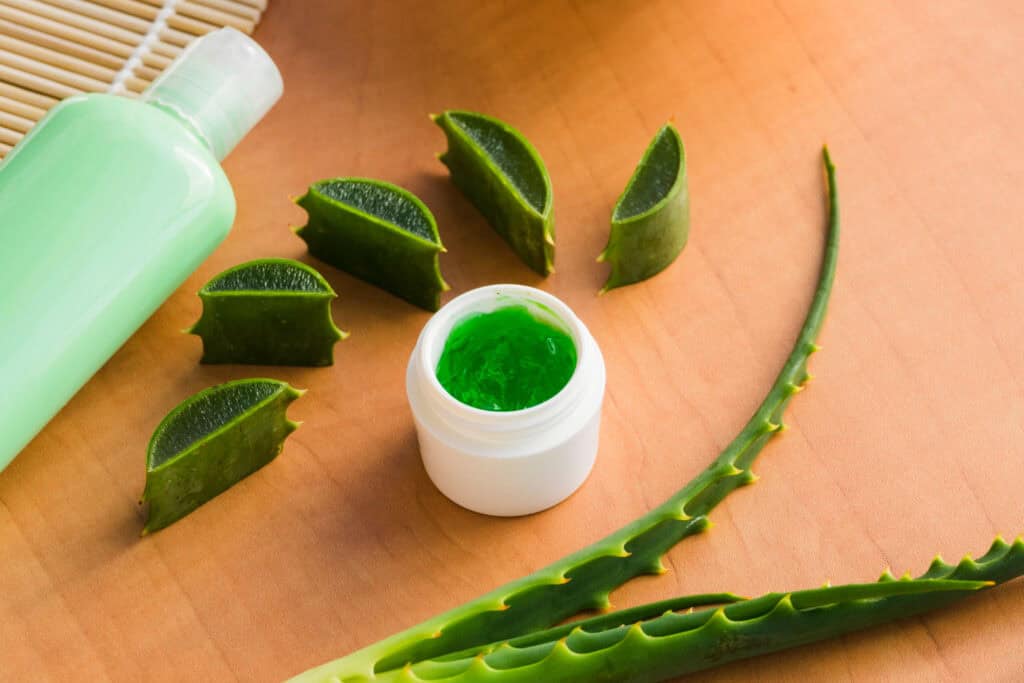
Not all natural ingredients soothe the skin gently, but I have found a few naturally sourced
ingredients I trust to provide soothing and barrier strengthening benefits. Here is my list of
trusted natural ingredients.
Aloe vera (when the formula stays simple)
Aloe Vera can be very effective at providing instant relief when the skin feels warm or
itchy. When searching for Aloe Vera products, look for those that include Aloe along with other
hydrating agents and do not contain a long list of fragrances. Do not use any Aloe Vera gel
products that contain alcohol because they will dehydrate your skin.
Colloidal oatmeal
Colloidal Oatmeal is very effective for managing the symptoms associated with dry skin,
eczema, and a tight, post cleansing feeling. The soothing properties of Colloidal Oatmeal
provide significant benefits when used consistently.
Centella asiatica (cica)
Cica will help reduce redness and sensitivity while enhancing the healing of skin that feels
uncomfortable or irritated. The simplest way to use Cica is to pair it with a regular
moisturizer.
Calendula and chamomile
These two can soften the “angry skin” feeling, especially when you deal with mild redness or
irritation from weather changes. Be sure to perform a patch test on your skin before applying.
Honey (and gentle propolis)
Honey supports hydration and comfort. You’ll usually see it in masks and richer creams. If you
deal with very reactive skin, choose formulas that keep fragrance out and keep the ingredient
list tight.
Jojoba oil
Jojoba behaves a lot like your skin’s own oils. It helps with dryness without that heavy, greasy
feel. It also works nicely around flaky areas, nose creases, chin, and cheeks.
Shea butter
Shea helps dry, irritated skin hold onto moisture. It shines in night creams and barrier creams. If
you clog easily, use a smaller amount and keep it to the driest zones.
Dead Sea minerals (magnesium, potassium, calcium)
When brands use reasonable amounts of these ingredients, these minerals help maintain a
balance between comfort and hydration. Magnesium supports the recovery of your barrier (the
top layer of your skin). Potassium helps maintain a moisture balance. Calcium supports
renewal. It is important to note that “more minerals” does not necessarily mean “more
soothing”. An overly salty formula may be extremely drying to compromised skin.
What to look for when you shop
You can find soothing ingredients everywhere, but the label needs to match the promise. Use
this checklist:
● Choose fragrance free products or those with a minimal scent.
● Select face washes with gentle cleansing agents that don’t leave a polish clean finish.
● Combine humectants and emollients for hydration and softness.
● Opt for shorter ingredient lists if your skin reacts easily.
● Ensure each product has a clear purpose, such as cleansing, moisture, or sun protection.
Avoid products that claim to be ‘calming,’ ‘deep cleansing,’ ‘brightening,’ and ‘pore stripping’ all
at once, as this can confuse your skin.
Use skin care products that keep their job simple. Your skin usually responds better to
consistency than variety.
“If you’re still unsure whether Dead Sea skincare is effective at all, this guide builds on the research explained here“.
Who benefits most, and when you should slow down
This approach fits you well if you deal with the following:
● Dryness that turns into irritation
● Redness that flares with weather, heat, or stress
● Stinging after cleansing
● Skin that reacts whenever you try new activities
Now the caution side. Slow down if you deal with open cracks, recent procedures, active
rashes, or sudden swelling. Talk to a dermatologist when symptoms spike fast or don’t settle.
Patch test new products. Pick one product, not three. Give it time.
Side effects/cautions – Don’t skip this part
Natural doesn’t mean risk free. Do this instead:
● Before using a product for an extended period, test it on a small area along your jawline
for 2 to 3 nights.
● Don’t try to combine multiple products at once; use only one at a time.
● If you have sensitive skin, it is recommended that you avoid using essential oils.
● If you experience any burning, not just a mild tingling, discontinue use immediately.
● For long lasting rashes, severe swelling, or cracked skin, make an appointment with a
dermatologist.
Final Thoughts
Soothing skin doesn’t require fancy steps. It requires restraint and smart ingredients.
Keep it simple:
● Choose one gentle cleanser or even just a rinse in the morning if your skin feels okay
● Use a moisturizer that focuses on barrier comfort
● Add a soothing ingredient like oatmeal, cica, aloe, or jojoba
● Wear sunscreen daily and reapply when you stay outdoors
Start gradually. Give your skin a week or two to settle before you judge results. If you want to
explore a ready range of options, browse De Rien’s skin-care collection and stick to the basics
first: cleanse, moisturize, protect.


