The standard advice for achieving a glowing, healthy complexion usually follows a familiar, highly predictable script. We are told to invest in heavily marketed hyaluronic acid serums, layer ceramide rich moisturizers morning and night, lock everything in with cold pressed facial oils, and absolutely never skip sunscreen.
Beauty aisles and digital storefronts are packed with thousands of products promising to solve dryness, flakiness, and premature aging; yet, despite maintaining a meticulous multi step routine, many individuals still find themselves dealing with tight, irritated, or persistently dehydrated skin that refuses to heal.
When topically applied products fail to deliver the promised results despite your best efforts, the underlying issue rarely lies in the bottles sitting on your vanity. Instead, the true culprit is almost always the invisible environment surrounding you, which can actively counteract even the most expensive cosmetic treatments.
Your skin does not exist in an isolated vacuum; it constantly interacts with the ambient air in your home or office. Specifically, indoor humidity levels play a monumental role in determining how effectively your skin cells retain moisture throughout the day.
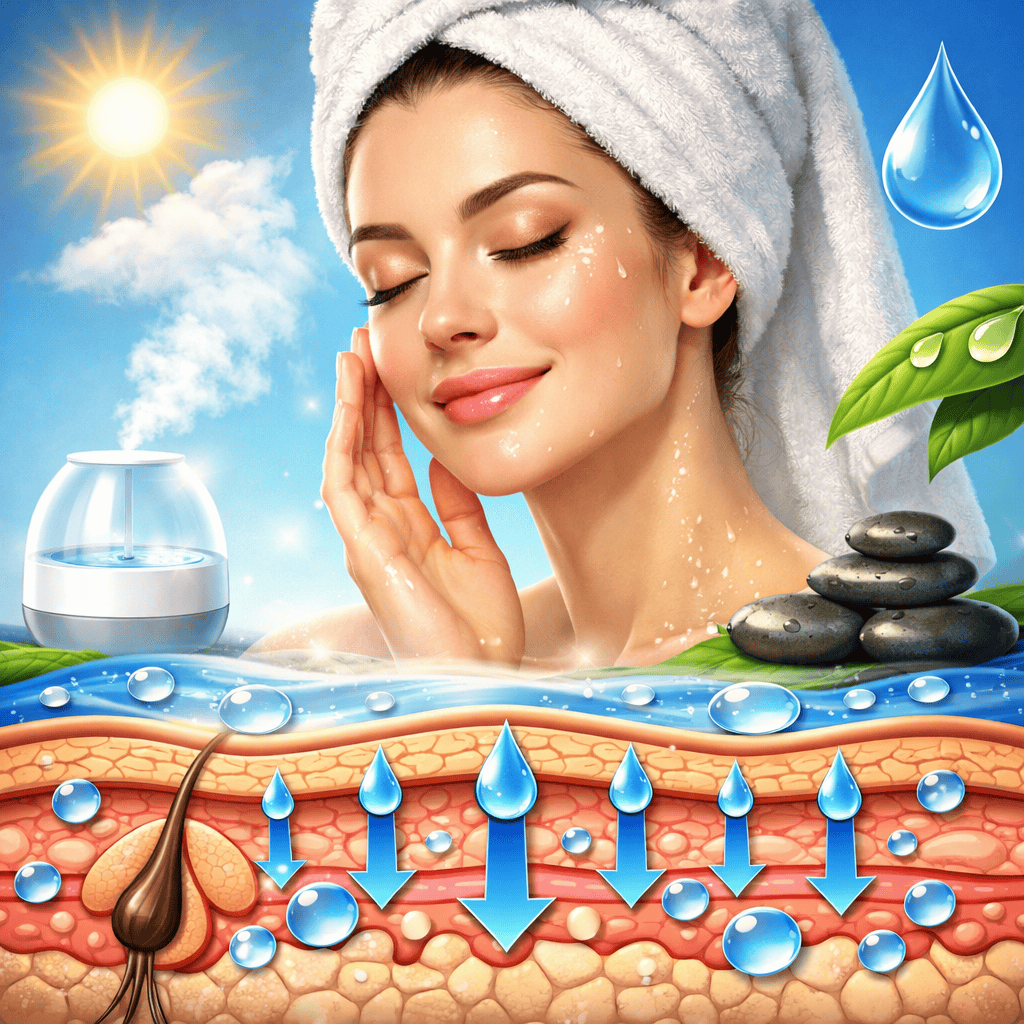
If the air around you is bone dry, it acts like a giant sponge, aggressively pulling water right out of your delicate skin barrier through a natural process known as trans epidermal water loss.
Optimizing your indoor humidity is the crucial, missing step that bridges the gap between topical skincare and true, lasting skin health.
By actively controlling the moisture levels in your primary living spaces, you create a supportive environment where your carefully selected skincare products can actually do their jobs instead of fighting a losing battle against the air.
The Science of Skin Hydration and Indoor Air
To understand why indoor air quality and ambient humidity matter so much, it helps to dive into the biological mechanisms that govern how the skin barrier retains its moisture.
The outermost layer of your skin, scientifically termed the stratum corneum, functions much like a traditional brick wall structure.
In this analogy, the flattened skin cells, or corneocytes, act as the sturdy bricks, while a complex matrix of lipids, cholesterol, ceramides, and natural moisturizing factors serves as the protective mortar.
This barrier is tasked with two primary biological jobs: it forms a defense line to keep external irritants out, and it maintains a seal to keep vital moisture locked inside.
When the relative humidity indoors drops below the ideal healthy range of 40% to 60%, a steep and aggressive moisture gradient is established between your warm body and the surrounding environment.
Because the laws of diffusion naturally dictate that moisture moves from areas of high concentration to areas of low concentration, the dry indoor air actively draws water out of your cellular layers.
This constant, unrelenting evaporation compromises the structural integrity of your skin barrier, causing the microscopic lipids to crack and pull apart.
Furthermore, popular hydrating ingredients like hyaluronic acid and glycerin are humectants, which means they are chemically designed to attract and bind water molecules.
In a properly humid environment, these ingredients draw moisture directly from the surrounding air and bind it into your skin matrix.
However, in a low humidity environment where the air contains virtually no moisture to grab, these humectants are forced to reverse their function.
They begin pulling water upward from the deeper layers of your dermis instead, and if that moisture is not immediately sealed in with a heavy, occlusive cream, it evaporates entirely into the dry room, leaving your deeper skin layers significantly more dehydrated than they were before you applied any products at all.
Signs Your Living Environment is Sabotaging Your Complexion
Recognizing that your home or office space is quietly draining your skin of its vital moisture is the first necessary step toward resolving the issue permanently.
Dehydration manifests quite differently than simple dry skin, which is actually a genetic skin type characterized by a chronic lack of natural oil and sebum production.
Dehydrated skin, on the other hand, is a temporary structural condition characterized by a severe lack of water, meaning that even someone with an naturally oily or acne prone complexion can suffer from it simultaneously.
If your indoor air is excessively dry, you will likely notice a distinct, uncomfortable tight sensation immediately after cleansing your face, or even a few hours after applying your heavy morning moisturizer.
Your skin might look noticeably dull and lackluster in the mirror, or it may display fine, crepey lines that seem to magically appear and disappear depending on the specific room you are spending time in.
Flakiness around the corners of the nose and mouth, sudden sensitivity to gentle products that used to work perfectly, and a frustrating overproduction of surface oil are also classic warning signs of an environmental issue.
When the skin barrier detects that it is losing water rapidly to the air, it often attempts to compensate for the friction by pumping out excess surface oil, leading to an oily sheen over a tight, dry base. Beyond these immediate cosmetic frustrations, prolonged exposure to dry indoor air can seriously exacerbate chronic, underlying skin conditions.
Eczema flare ups, psoriasis plaques, and rosacea redness are all severely aggravated when the environmental humidity drops, as the skin loses its natural defenses against external triggers, environmental pollutants, and opportunistic surface bacteria.
Practical Strategies to Optimize Indoor Humidity
Fixing a dry indoor climate requires a thoughtful combination of immediate environmental adjustments and targeted lifestyle shifts.
You certainly do not need to turn your living room into a tropical rainforest to see results, but bringing the relative humidity up into the healthy 40% to 60% zone will yield noticeable, transformative changes in your skin within a matter of days.
1. Leverage Smart Humidification Systems
The most direct and effective way to counter dry indoor air is by introducing a dedicated humidifier to your space, particularly inside the bedroom.
Because your body undergoes its natural cellular repair processes while you sleep, keeping the air hydrated during these critical eight hours is paramount for barrier recovery.
Cool mist ultrasonic humidifiers are excellent choices for modern homes because they break water down into a micro fine vapor without raising the room temperature.
To get the best results, place the unit a few feet away from your bed rather than directly on a nightstand next to your face, and always use distilled or demineralized water to prevent the dispersion of white mineral dust.
2. Monitor Your Environment with a Hygrometer
Do not rely on pure guesswork when it comes to assessing your indoor humidity levels. Investing in a small, inexpensive digital hygrometer will give you real time, accurate readings of the moisture percentages throughout your home.
This data allows you to adjust your humidifier settings or your central heating system accurately, ensuring you maintain the sweet spot and do not accidentally overshoot the mark, which could create a damp environment that encourages unwanted mold growth.
3. Adjust Your Heating and Cooling Habits
Forced air heating systems and standard air conditioning units are notorious for aggressively stripping moisture from indoor environments during peak seasons.
While you cannot completely forgo modern climate control for the sake of comfort, you can certainly minimize its drying impact.
Avoid setting your thermostat to extreme temperatures; intense heat in the winter and rapid cooling in the summer both dry out the air at an accelerated rate.
Additionally, keeping interior doors open allows air to circulate more freely throughout the layout, preventing localized zones of stagnant, moisture depleted air.
Overlooked Environmental Factors: Maintenance and Cleanliness
While buying a quality humidifier is an excellent initial step, true environmental optimization requires looking at the broader, hidden infrastructure of your home.
Many homeowners fail to realize that their entire heating, ventilation, and air conditioning system can actively contribute to chronic skin irritation and dehydration if the internal components are left unmaintained for years.
Over months and seasons of continuous operation, massive amounts of dust, pet dander, pollen, and microscopic mold spores naturally accumulate inside your home’s hidden ductwork.
Every single time your furnace or air conditioner kicks on, these tiny particles are blasted directly into your living spaces, circulating invisibly through the air.
When you breathe this air continuously, or when it constantly blows across your face while you sit at a desk, it does far more than just trigger standard respiratory allergies.
These microscopic particles settle directly onto your skin surface, causing low grade inflammation, physical irritation, and oxidative stress.
This constant bombardment of particulate matter can clog pores, disrupt the delicate balance of your skin microbiome, and systematically weaken the skin barrier, making it even harder for your cells to retain what little moisture is left in the dry air.
This is exactly where comprehensive home maintenance becomes an unexpected, highly effective asset for your daily beauty routine.
Scheduling professional air duct cleaning helps eliminate the hidden, deep seated reservoir of allergens and debris that constantly circulates through your vents.
By completely removing this buildup, you ensure that the air being pushed into your home is genuinely clean and free of abrasive particles that scratch or irritate the sensitive skin surface.
Furthermore, clean ducts allow your climate control systems to run with optimal mechanical efficiency, making it far easier for the system to maintain steady, balanced humidity levels throughout changing seasonal transitions.
In addition to regular air duct cleaning, make sure to replace your HVAC system’s air filters every ninety days without fail. Opt for high quality filters with a high Minimum Efficiency Reporting Value rating to effectively trap smaller micro particles before they ever enter your living spaces.
Taking proper care of these mechanical systems creates a clean environmental foundation, ensuring that your secondary humidification strategies are working with pure, healthy air rather than circulating dust.
Tailoring Your Skincare to Your Restored Environment
Once you have successfully balanced your indoor humidity levels and cleaned up your air quality, you can easily optimize your topical routine to take full advantage of your newly restored environment.
With ample moisture finally back in the surrounding air, your humectant serums will perform beautifully, pulling water molecules from the atmosphere directly into your stratum corneum.
Modify your product application method by leaving your skin slightly damp after washing your face at the sink.
Instead of towel drying your face completely, apply your facial essence, hydrating toner, or hyaluronic acid serum straight onto wet skin, which provides immediate water for the products to bind to.
Next, layer a nourishing moisturizer containing lipids, fatty acids, and plant sterols to actively rebuild the skin’s structural mortar.
Finally, if you are still dealing with severe seasonal dryness, seal the entire routine at night with a thin layer of an occlusive balm or a nutrient dense facial oil.
This systematic approach creates a physical shield that works in perfect harmony with your freshly humidified indoor climate.
You can explore current mineral based face cream options from verified retailers here
Conclusion and Next Steps
Achieving a truly healthy, radiant complexion requires looking well beyond the active ingredients listed on your skincare bottles.
True skin health is a holistic ecosystem that closely involves your genetics, your topical routine, and the very air you breathe for hours every single day inside your home.
By recognizing the profound impact of low indoor humidity and airborne irritants, you can finally reclaim control over your skin barrier and eliminate chronic dehydration.
Take a meaningful moment today to evaluate your immediate indoor environment rather than searching for another new product.
Invest in a simple digital hygrometer to check your home’s baseline moisture levels, set up a cool mist humidifier in your bedroom to protect your skin overnight, and look into long term home maintenance solutions like professional air duct cleaning to clear out systemic dust and debris from your ventilation system.
Your skin barrier will thank you for the environmental relief, and you will finally see the full, glowing potential of your favorite skincare products.
If you want to try mineral based treatments, you can explore our guide to the best Dead Sea salt products for skin, where we compare several options suitable for different skin types.