Face masks have become an essential part of modern skincare routines, especially for people dealing with acne, excess oil, clogged pores, and dull looking skin. Among the most popular options are Dead Sea mud masks and clay masks. While both are known for their detoxifying and purifying properties, they differ significantly in composition, benefits, and how they affect the skin.
If you’re wondering which one deserves a place in your skincare routine, this guide will compare Dead Sea mud masks and clay masks in detail, helping you choose the best option for acne prone, oily, or lackluster skin.
What Is a Dead Sea Mud Mask?
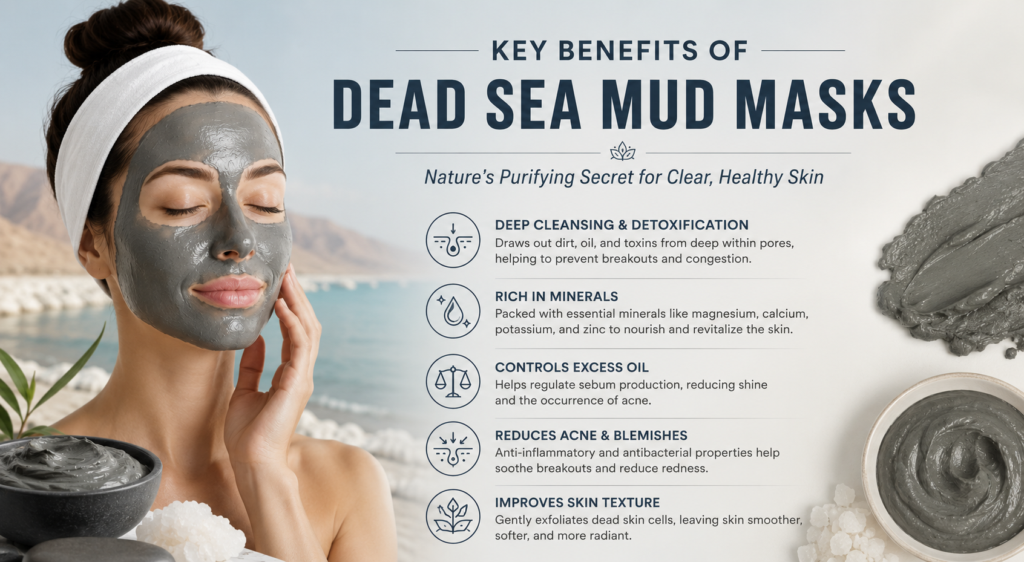
Dead Sea mud is a mineral rich natural substance harvested from the Dead Sea, a salt lake located between Jordan and Israel. The mud contains a unique blend of minerals such as magnesium, calcium, potassium, sodium, and sulfur. These minerals are known for their skin nourishing and therapeutic benefits.
A Dead Sea mud mask is designed to cleanse, exfoliate, and revitalize the skin while delivering essential minerals. Unlike many traditional masks that focus solely on oil absorption, Dead Sea mud masks work to improve overall skin health and appearance.
Key Benefits of Dead Sea Mud Masks
- Deeply cleanses pores
- Removes excess oil and impurities
- Supports skin hydration
- Improves skin texture
- Enhances circulation
- Helps reduce the appearance of blemishes
- Promotes a healthy, radiant glow
Because of its balanced action, Dead Sea mud is often recommended for people who want purification without excessive dryness.
What Is a Clay Mask?
Clay masks are made from natural clays such as bentonite, kaolin, French green clay, or rhassoul clay. These clays have powerful absorbent properties that draw out oil, dirt, toxins, and impurities from the skin.
Clay masks are particularly popular among individuals with oily and acne prone skin because they help control sebum production and reduce shine.
Common Types of Clay Used in Masks
Bentonite Clay
Known for its strong oil absorbing abilities, bentonite clay is often used for acne prone skin.
Kaolin Clay
A gentler clay suitable for sensitive skin, available in white, pink, yellow, and red varieties.
French Green Clay
Rich in minerals and highly absorbent, making it ideal for oily skin.
Rhassoul Clay
A mineral rich clay from Morocco that cleanses while maintaining moisture balance.
Key Benefits of Clay Masks
- Absorb excess oil
- Tighten the appearance of pores
- Reduce shine
- Remove impurities
- Help prevent breakouts
- Improve skin clarity
While clay masks are effective for oily complexions, some formulations may leave skin feeling tight or dry if used too frequently.
Dead Sea Mud Mask vs. Clay Mask for Acne
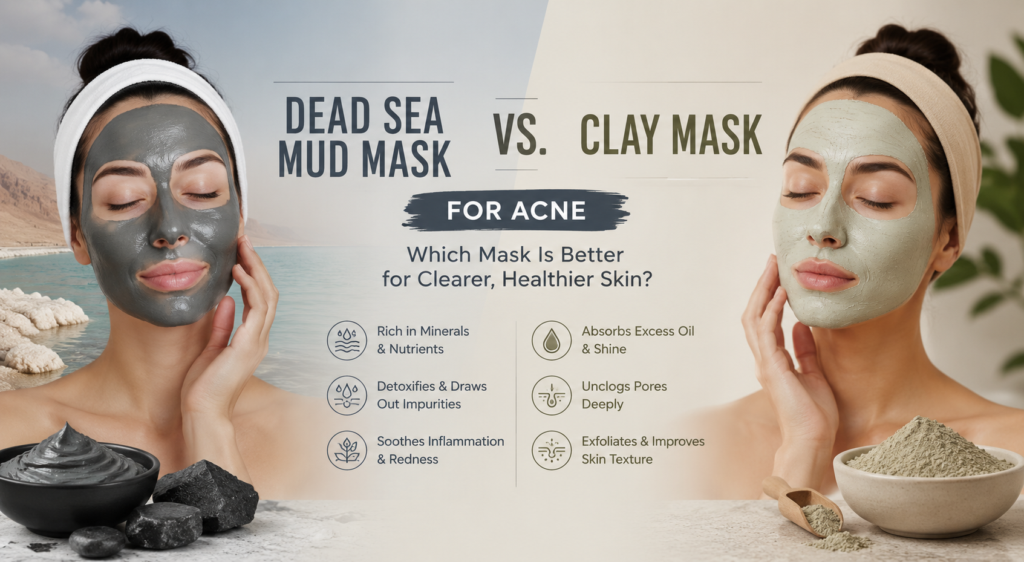
Acne develops when pores become clogged with excess oil, dead skin cells, and bacteria. Both Dead Sea mud masks and clay masks can support acne management, but they work differently.
How Dead Sea Mud Helps Acne
Dead Sea mud contains sulfur and other minerals that may help calm irritated skin and support the skin’s natural healing process. It removes dirt and excess oil while maintaining moisture levels, making it suitable for people whose acne is accompanied by sensitivity or inflammation.
The gentle exfoliating effect of Dead Sea mud also helps remove dead skin cells that contribute to clogged pores.
How Clay Masks Help Acne
Clay masks are highly effective at drawing oil and impurities from deep within the pores. By reducing excess sebum, they create an environment that is less favorable for acne causing bacteria.
Bentonite clay, in particular, is often recommended for individuals experiencing frequent breakouts because of its strong cleansing and oil control properties.
Which Is Better for Acne?
The answer depends on your skin type:
- For oily acne prone skin, clay masks often provide faster oil reduction and pore cleansing.
- For sensitive acne prone skin, Dead Sea mud masks may be the better choice because they cleanse without causing excessive dryness.
If acne is severe and linked to significant oil production, clay masks generally have a slight advantage. However, for balanced skin health and reduced irritation, Dead Sea mud masks are often preferred.
Dead Sea Mud Mask vs. Clay Mask for Oil Control
One of the biggest reasons people use face masks is to manage oily skin.
Oil Control Performance of Clay Masks
Clay is widely regarded as one of the best natural ingredients for controlling excess oil. It acts like a sponge, absorbing sebum from the skin’s surface and within pores.
Benefits include:
- Reduced facial shine
- Less greasy appearance
- Smaller looking pores
- Improved makeup wear
Many people notice immediate mattifying effects after using a clay mask.
Oil Control Performance of Dead Sea Mud Masks
Dead Sea mud also removes excess oil, but it does so more gently. Instead of aggressively stripping the skin, it helps balance oil production while providing beneficial minerals.
This can be particularly helpful because overly drying products sometimes trigger the skin to produce even more oil as compensation.
Which Is Better for Oil Control?
For maximum oil absorption, clay masks are the clear winner.
However, if your skin becomes irritated or overly dry after using clay, a Dead Sea mud mask may offer a more balanced solution that still reduces oiliness while maintaining skin comfort.
Dead Sea Mud Mask vs. Clay Mask for Dull Skin
Dull skin often results from dead skin buildup, dehydration, environmental stress, and poor circulation.
How Dead Sea Mud Revives Dull Skin
Dead Sea mud is rich in minerals that help improve skin vitality and brightness. It promotes gentle exfoliation while enhancing circulation, leaving the skin looking refreshed and energized.
Many users report smoother texture and a healthy glow after regular use.
The mineral content also supports skin hydration, which is crucial for maintaining radiance.
How Clay Masks Improve Dull Skin
Clay masks remove surface impurities and dead skin cells, helping reveal fresher looking skin underneath.
However, because some clay masks can be drying, the brightening effects may be temporary if moisture levels are not restored afterward.
Which Is Better for Dull Skin?
Dead Sea mud masks generally outperform clay masks for dull skin because they combine exfoliation, mineral nourishment, and hydration support.
If your primary concern is restoring radiance and achieving a healthy glow, Dead Sea mud is often the superior choice.
Which Mask Is Better for Different Skin Types?
Oily Skin
Best Choice: Clay Mask
The strong oil absorbing properties of clay make it ideal for managing shine and preventing clogged pores.
Combination Skin
Best Choice: Dead Sea Mud Mask
Dead Sea mud offers purification without over drying the less oily areas of the face.
Dry Skin
Best Choice: Dead Sea Mud Mask
The mineral rich composition supports hydration while cleansing the skin gently.
Sensitive Skin
Best Choice: Dead Sea Mud Mask
Its soothing minerals can help reduce irritation and discomfort compared to some highly absorbent clay masks.
Acne Prone Skin
Best Choice: Depends on Severity
- Oily acne prone skin: Clay Mask
- Sensitive acne prone skin: Dead Sea Mud Mask
Can You Use Both Masks?
Absolutely. Many skincare enthusiasts alternate between Dead Sea mud masks and clay masks to enjoy the benefits of both.
For example:
- Use a clay mask once a week for deep oil control.
- Use a Dead Sea mud mask once a week for nourishment and revitalization.
This approach can help maintain clear pores while keeping the skin balanced and healthy.
Many advocates of organic skincare also combine mineral rich masks with botanical ingredients such as aloe vera, chamomile, and green tea to support overall skin wellness.
Potential Drawbacks
Dead Sea Mud Mask Drawbacks
- Usually more expensive than clay masks
- May not absorb oil as aggressively
- Can cause irritation in people sensitive to mineral rich products
Clay Mask Drawbacks
- Can over dry the skin
- May leave the skin feeling tight
- Excessive use can disrupt the skin barrier
Using either mask according to product instructions is important to avoid unwanted side effects.
How Often Should You Use Them?
Dead Sea Mud Mask
Most people benefit from using it one to three times per week, depending on skin type and product strength.
Clay Mask
One to two times per week is typically sufficient. Frequent use may lead to dryness, especially for sensitive skin types.
Always follow with a moisturizer to help maintain hydration and protect the skin barrier.
Final Verdict: Which Is Better?
When comparing Dead Sea mud masks and clay masks, there is no single winner for every skin concern.
Choose a Dead Sea mud mask if you want:
- Improved skin radiance
- Gentle detoxification
- Mineral nourishment
- Better hydration balance
- Support for sensitive or dull skin
Choose a clay mask if you want:
- Strong oil control
- Deep pore cleansing
- Reduced shine
- Intensive support for oily skin
- Frequent breakout management
For acne, oil control, and dull skin combined, many skincare experts consider Dead Sea mud masks the more versatile option because they cleanse, nourish, and brighten without excessively drying the skin. However, individuals with very oily skin may still find clay masks more effective for managing excess sebum.
Ultimately, the best choice depends on your skin type, concerns, and skincare goals. Whether you prefer a mineral rich Dead Sea mud mask or a powerful clay treatment, incorporating the right mask into your routine can help you achieve clearer, healthier, and more radiant skin. Pairing these treatments with a consistent skincare regimen and quality plant based skincare products can further enhance your results and support long term skin health.
If you’re new to mineral skincare, it helps to understand how Dead Sea minerals support sensitive skin before choosing a moisturizer.