Independently researched. Some links may earn us a commission. How we make money
Yes, you can mix Dead Sea salt and Epsom salt in the same bath. Both are water-soluble mineral salts, they do not react with each other in any way that matters at bath strength, and plenty of commercial soaks already combine them. The more useful questions are what each salt actually adds, how much to use, and who should skip salt baths altogether. This guide covers all three.
What is in each salt
The two salts are often sold side by side, but they are chemically different products.
- Dead Sea salt (on cosmetic labels: Maris Sal) is evaporated from Dead Sea brine. It is a mix of chlorides: magnesium chloride, sodium chloride, potassium chloride and calcium chloride, plus bromide, a little sulfate and some insoluble grains. That is how UK retailers list the composition of Westlab’s Dead Sea salt, for example. Compared with ordinary sea salt, which is mostly sodium chloride, it is much richer in magnesium and potassium.
- Epsom salt is magnesium sulfate. It contains no sodium chloride and none of the other Dead Sea minerals. Pharmacy grades are sold both as a bath soak and, separately, as an oral laxative, which is one reason it needs careful storage (more on that below).
The exact mineral balance of Dead Sea salt varies between brands and harvests, and most packs do not print a breakdown. If magnesium content matters to you, look for a brand that publishes one.
For a fuller side-by-side comparison, see our guide to Dead Sea salt vs Epsom salt for skin.
What the evidence says each one does
Dead Sea salt and skin
The most cited study is small but useful. Volunteers with dry, atopic skin soaked one forearm for 15 minutes in a 5% solution of a magnesium-rich Dead Sea salt and the other forearm in tap water, over six weeks. Skin hydration improved on the salt-treated arm, and roughness and redness went down. The improvement in skin barrier function was significant only in the subgroup whose barrier was already impaired at the start, measured as high water loss through the skin (Proksch et al., 2005).
Two limits are worth knowing. The study used one specific salt taken from deep layers of the Dead Sea, and a 5% solution is far stronger than a home bath. In a tub holding 150 liters, 5% would mean 7.5 kg of salt. Two cups, roughly 500 g, in the same tub gives about 0.3%, around fifteen times weaker. A home soak can still feel pleasant on dry skin, but it is not a copy of the study conditions.
Epsom salt and “magnesium absorption”
Epsom salt baths are usually sold on the idea that magnesium passes through the skin and relaxes muscles. A 2017 review of the evidence on transdermal magnesium, including magnesium flakes and salt baths, concluded that this idea is scientifically unsupported (Gröber et al., 2017). The same doubt applies to the magnesium in Dead Sea salt. Healthy skin is a good barrier, and there is no reliable data showing that a bath raises the body’s magnesium levels.
That does not make the bath pointless. Warm water, time spent lying still and a pleasant skin feel are real reasons people enjoy a soak. Just do not expect either salt to work like a supplement.
Why blend them at all
Mixing the two is mostly a practical choice:
- Cost. Epsom salt is usually much cheaper per kilo than authentic Dead Sea salt, so blending stretches the Dead Sea salt further.
- Skin feel. Dead Sea salt brings the chloride minerals, the ones used in the study above. Epsom salt alone does not.
- Handling. Magnesium chloride and calcium chloride attract water from the air, so pure Dead Sea salt tends to clump and turn damp in a humid bathroom. Epsom salt flows more freely. A blend is often easier to scoop.
How to mix Dead Sea salt and Epsom salt
There is no research on ideal ratios, so treat these as starting points. Brand directions for pure Dead Sea salt range from about 1 cup (AHAVA) to 1 to 2 cups (Dead Sea Warehouse) per bath, and Westlab’s pack suggests 1 to 4 cups (250 g to 1 kg). The blends below stay within that range.
| Goal | Dead Sea salt | Epsom salt | Notes |
|---|---|---|---|
| First try | 1/2 cup | 1/2 cup | A 1:1 blend, about 250 g in total |
| Dry skin focus | 1 cup | 1/2 cup | A 2:1 blend that puts the Dead Sea minerals first |
| Budget soak | 1/2 cup | 1 cup | Mostly Epsom, with some Dead Sea salt for skin feel |
| Foot soak (basin) | 2 tablespoons | 2 tablespoons | Not for people with diabetes (see below) |
Step by step
- Fill the tub with warm water, not hot. Hot water dries the skin and can make you lightheaded, especially after a long soak.
- Add the salts while the tap runs and swirl the water. Fine grain dissolves faster than coarse. Check that no crystals are left on the bottom before you sit on them.
- Soak for 15 to 20 minutes. AHAVA and Westlab both suggest about 20 minutes. Longer is not better for dry skin.
- Rinse briefly with fresh water, pat dry, and apply a moisturizer while the skin is still slightly damp. Salt left on the skin can feel tight and itchy as it dries.
- Drink some water afterwards if you feel warm or thirsty, as you would after any hot bath.
How often is reasonable depends on your skin. We cover that in how often to use Dead Sea salt on skin.
Making a blend to keep
If you prefer a ready jar, mix the salts dry in a clean bowl and store the blend in an airtight glass or plastic jar, away from steam. Use a dry scoop, since wet hands will make Dead Sea salt cake. If you want a scent, a few drops of an essential oil are enough for a whole jar, but fragrance ingredients are a common cause of skin allergy, so leave it out if your skin reacts easily. Label the jar clearly as bath salt.
Who should skip or check first
- Broken or very inflamed skin. Salt stings open skin. AHAVA’s own label says not to use its bath salt on damaged skin. Wait until cuts, cracks or a bad flare have settled.
- Diabetes. NHS diabetes foot care advice is not to soak your feet, because soaking can damage the skin, and to test bath water with your elbow because diabetes can reduce how well you feel hot and cold (NHS Scotland, My Diabetes My Way). Ask your diabetes team before using salt soaks.
- High blood pressure, heart conditions or pregnancy. AHAVA’s label asks people with high blood pressure to consult a doctor first, and Westlab’s pack advises asking a pharmacist about regular use during pregnancy or with a medical condition. Long, hot baths are the bigger concern here, so keep the water warm and the soak short.
- Young children. AHAVA says its bath salt is not for children under 3.
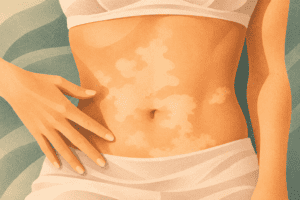
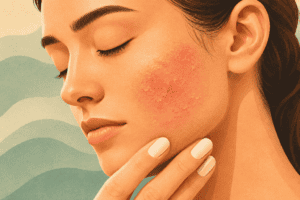
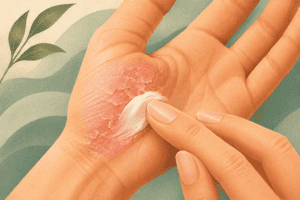
- Eczema or psoriasis. A salt soak can feel soothing for some people and sting for others. Ask your dermatologist whether it fits your treatment plan. Our articles on Dead Sea salt for eczema and psoriasis go into the evidence in more detail.
Never eat or drink either salt
Bath salts are not food. Swallowing a large amount of Dead Sea water is toxic and can cause dangerous heart rhythm problems because of the high electrolyte load (Katz et al., 2012). Epsom salt taken by mouth in excess can cause severe magnesium poisoning. One published case describes a cardiac arrest after an accidental overdose in a woman with normal kidney function (Shoaib Khan et al., 2018). Store bath salts away from kitchen salt and out of reach of children.
Buying the two salts
For the Dead Sea half of the blend, choose a product whose ingredient list is only Maris Sal or Dead Sea salt, with no added fragrance. Minera Dead Sea Salt is one example: the brand describes it as unscented and sells it in fine (0 to 1.7 mm) and coarse (1.7 to 4 mm) grain. Fine grain dissolves faster, which helps when you are mixing it with Epsom salt. For the other half, any plain, unscented Epsom salt labeled as magnesium sulfate will do. Scented Epsom soaks add fragrance you may not want on dry or reactive skin.
Be careful with products sold as “Dead Sea magnesium flakes.” These are usually magnesium chloride extracted from the Dead Sea, not whole Dead Sea salt, so they lack the sodium, potassium and calcium salts. They are a different product, not a substitute for either half of the blend.
We compare pure and scented options in our guide to the best Dead Sea salt products.
Frequently asked questions
Is Dead Sea salt better than Epsom salt?
For skin, Dead Sea salt has the better evidence, from the small Proksch study on dry, atopic skin. Epsom salt has no comparable skin study. For muscle relief, neither has good evidence that the salt itself does more than warm water. Epsom salt is cheaper, which is why many people blend the two.
Is an Epsom salt bath good for eczema?
There is no good research showing that Epsom salt improves eczema, and any salt can sting skin that is cracked or weeping. If you have eczema, talk to your dermatologist before adding salt soaks to your routine, keep baths short and lukewarm, and moisturize straight afterwards.
Can I add oil to the bath?
You can add a spoonful of a plain plant oil, such as sweet almond or jojoba, for a softer skin feel afterwards. It makes the tub slippery, so take care getting out. Skip it if you have a nut allergy and the oil is nut-based.