Independently researched. Some links may earn us a commission. How we make money
To use Dead Sea bath salts, dissolve 1 to 2 cups (about 250 to 500 g) in a full tub of warm water, soak for 10 to 20 minutes, rinse briefly with fresh water and put on moisturizer while your skin is still damp. Once or twice a week is a sensible place to start. That covers most people. The rest of this guide explains each step, when to change it (dry skin, eczema, foot soaks, bedtime baths) and who should skip salt baths.
The short version
| Step | Full bath | Foot soak |
|---|---|---|
| Amount | 1 to 2 cups (250 to 500 g) | 2 to 4 tablespoons in a basin |
| Water | Warm, not hot | Warm, not hot |
| Time | 10 to 20 minutes | 10 to 15 minutes |
| After | Quick rinse, pat dry, moisturize | Rinse, dry between toes, moisturize |
| How often | 1 to 2 times a week to start | 1 to 2 times a week |
How much Dead Sea salt to put in a bath
Brand directions cluster around the same range. AHAVA suggests about 1 cup, Dead Sea Warehouse 1 to 2 cups, and Westlab 1 to 4 cups (250 g to 1 kg). One US cup of bath salt weighs roughly 250 g.
It helps to know how dilute this is. A typical bathtub holds around 150 liters of water. Two cups (about 500 g) in that tub gives a solution of roughly 0.3% salt. Seawater is about 3.5%, and the Dead Sea itself is closer to 34%. So a home bath is about a tenth as salty as the ocean, and nothing like floating in the Dead Sea. The best-known study on Dead Sea salt and skin used a 5% solution (more on that below), which would mean several kilos in a home tub. You do not need to copy that. More salt does not mean better results, and on dry skin it can mean more tightness and itching.
Start with 1 cup. If your skin feels comfortable afterwards, try 2 cups next time.
Water temperature
Warm, not hot. Hot water strips oils from the skin and leaves it drier, and a long hot bath can make you lightheaded when you stand up. Test the water with your wrist or elbow, not your hand.
- Dry or itchy skin: keep it lukewarm to warm. The American Academy of Dermatology advises warm water and baths of five to ten minutes for dry skin (AAD).
- Bath before bed: a review of 17 studies found that a warm bath or shower at about 40 to 42.5 °C, taken 1 to 2 hours before bedtime, was linked to better self-rated sleep quality, and that as little as 10 minutes helped people fall asleep faster (Haghayegh et al., 2019). Those studies were about warm water, not salt, but the timing advice applies to any bath.
How long to soak
10 to 20 minutes is enough. Most brands suggest about 20 minutes. If your skin is dry or eczema-prone, stay at the shorter end, since longer soaks tend to leave dry skin feeling tighter once the water evaporates. If you feel dizzy, overheated or your heart is racing, get out slowly.
Step by step
- Run a warm bath and add the salt while the tap is running so it dissolves. Fine grain dissolves in a minute or two. Coarse grain takes longer, so swirl the water and check that no crystals are left where you will sit.
- Soak for 10 to 20 minutes. Keep your face out of the water. Salt water stings the eyes.
- Rinse briefly with fresh water. Some people prefer to skip this, but there is no evidence that leaving the salt on does anything useful, and dried salt can leave skin feeling tight and itchy.
- Pat dry and moisturize within a few minutes, while the skin is still slightly damp. This step matters more than the salt for dry skin. The AAD recommends applying moisturizer to damp skin after bathing.
- Drink some water if you feel warm or thirsty, as after any hot bath.
How often to take a Dead Sea salt bath
There are no studies that compare different frequencies of home salt baths, so this is practical guidance, not a research finding. Let your skin set the pace.
| Skin type | Starting frequency | Watch for |
|---|---|---|
| Normal or oily | 1 to 3 times a week | Tightness after the bath |
| Dry | Once a week, short soak | Flaking or itching the next day |
| Sensitive | Once every 7 to 10 days, 1 cup | Stinging or redness |
| Eczema or psoriasis | Ask your dermatologist first | Stinging on open or inflamed areas |
Signs that you are overdoing it: skin that feels tight or itchy for hours afterwards, flaking, redness, or a burning feeling when you put on your usual moisturizer. If that happens, stop for a week, focus on moisturizing, and restart with less salt, shorter soaks and fewer baths.
Daily salt baths are not a good idea for most people. Even plain water bathing every day dries skin out, and salt adds to that.
Foot soak
Dissolve 2 to 4 tablespoons of fine-grain Dead Sea salt in a basin of warm water and soak for 10 to 15 minutes. Rinse, dry carefully between the toes and moisturize the heels. Fine grain is easier here because it dissolves before your feet go in.
If you have diabetes, do not use foot soaks unless your diabetes team says otherwise. NHS diabetes foot care advice is not to soak your feet, because soaking can damage the skin, and to test bath water with your elbow because diabetes can reduce how well you feel heat (NHS Scotland).
Bath or scrub?
The same salt can be used two ways, and they do different jobs.
- A bath spreads the salt through a lot of water. It is gentle, covers the whole body, and is the format used in the research on dry skin.
- A scrub rubs undissolved crystals against the skin. It removes dead skin from rough areas such as elbows, knees and heels. Salt crystals are angular, so it is harsher than a bath.
If your skin is dry, sensitive or eczema-prone, a bath is the safer choice. If your main issue is rough patches, an occasional scrub is fine. Use a scrub once or twice a week at most, on damp skin with light pressure, and never on the face, freshly shaved or waxed skin, sunburn or broken skin. Do not scrub and take a salt bath on the same day.
A simple home scrub is 1/2 cup of fine Dead Sea salt mixed with 1/4 cup of a plain plant oil such as sweet almond, sunflower or olive. Make only what you will use that day. If you would rather buy one, see our roundup of the best Dead Sea salt body scrubs.
Making the bath feel like a spa
Most of what makes a spa bath pleasant has nothing to do with the salt: warm water, a quiet room, 20 minutes without a phone. A few additions are worth it and a few are not.
- A spoonful of plain oil (sweet almond, jojoba or sunflower) leaves skin softer afterwards. It makes the tub slippery, so take care getting out, and skip nut oils if you have a nut allergy.
- Essential oils add scent, but they do not dissolve in water and can sit on the surface undiluted. If you use them, mix 3 to 5 drops into the spoonful of oil or into the dry salt first. Leave them out if your skin reacts easily. Lavender and citrus oils are among those that can irritate or sensitize skin.
- Dried flowers, herbs and colorants look nice in a jar but add nothing to the skin and can clog the drain.
- Mixing with Epsom salt stretches an expensive bag of Dead Sea salt. Our guide on mixing Dead Sea salt and Epsom salt gives ratios.
If you make a blend to keep, mix the salt dry, add any oil sparingly, store it in an airtight jar away from steam and use a dry scoop. Dead Sea salt draws moisture from the air and will cake if it gets wet.
What to expect, and what not to
A warm salt bath can leave skin feeling softer and is a pleasant way to relax. In one small study, people with dry, atopic skin who soaked a forearm in a 5% Dead Sea salt solution for 15 minutes had better skin hydration and less roughness and redness than with tap water, and their skin barrier improved only in the group whose barrier was already impaired (Proksch et al., 2005).
A salt bath will not detox your body, and the magnesium in it is not absorbed in any useful amount through healthy skin (Gröber et al., 2017). For what the evidence does and does not support, see our guide to Dead Sea salt bath benefits for skin.
Who should skip or check first
- Broken, cracked, sunburned or freshly shaved skin. Salt stings. Wait until it has healed.
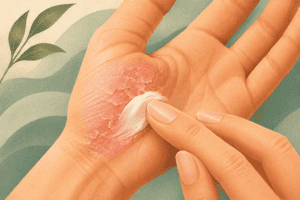
- Eczema or psoriasis. The National Eczema Association notes that salt baths may help some people but can sting open or badly inflamed skin, and recommends talking to a dermatologist first (NEA).
- Diabetes. Ask your diabetes team, especially about foot soaks.
- High blood pressure, heart conditions or pregnancy. Long hot baths are the main concern. Keep the water warm and the soak short, and ask your doctor about regular use. AHAVA’s label asks people with high blood pressure to consult a doctor first.
- Babies and young children. AHAVA says its bath salt is not for children under 3. Do not use salt baths for infants.
Never eat or drink bath salt, and keep it away from kitchen salt. Swallowing large amounts of Dead Sea water is toxic and can disturb heart rhythm (Katz et al., 2012).
Which salt to use
Use a salt whose only ingredient is Dead Sea salt (Maris Sal). Fine grain dissolves fastest. Minera Dead Sea Salt publishes its grain sizes and is unscented, which makes it an easy default. For more options and how to compare them, see our guide to the best Dead Sea bath salts.
Frequently asked questions
Can I use Dead Sea salt every day?
Not in a full bath for most people. Daily salt baths are likely to dry the skin. One to three times a week is plenty, and less if your skin is dry or sensitive.
Should I rinse off after a Dead Sea salt bath?
A short rinse is a good idea. There is no evidence that leaving the salt on helps, and dried salt can make skin feel tight and itchy. Moisturize straight afterwards.
Can I use Dead Sea salt on my face?
Not as a scrub. Salt crystals are angular and facial skin is thinner. Splashing the face with bath water is fine if it does not sting, but keep it out of your eyes.
Can I use Dead Sea salt in a hot tub or jetted bath?
Check the manufacturer’s instructions first. Dissolved salt and undissolved crystals can be hard on some pumps, heaters and seals, so follow what the maker of your tub allows.