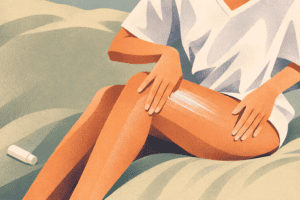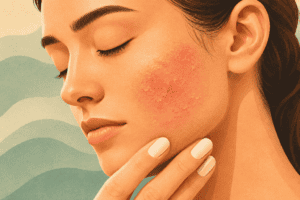
The short answer: skin stays hydrated when water inside it is kept from evaporating. You can do that without a bottled moisturizer by washing less harshly, applying a plain oil or a thin layer of petroleum jelly to skin that is still damp, raising the humidity in a dry room, and protecting your hands from repeated wetting. Drinking more water helps only a little, mainly if you drink very little to begin with. What does not work on its own is splashing or spraying water on your face: it evaporates and leaves skin drier than before.
How skin holds on to water
A moisturizer is not magic. In the lab we build one from three kinds of ingredients, and you can find each of them outside a jar of cream:
- Humectants pull water into the outer skin layer. Glycerin is the classic one; aloe gel and honey contain sugars that act in a similar way. Glycerin also supports skin barrier repair and protects against irritation (Fluhr et al., British Journal of Dermatology, 2008).
- Emollients fill the gaps between dry skin flakes so the surface feels smooth. Most plant oils do this.
- Occlusives form a film that slows water loss. Petroleum jelly is the most effective; mineral oil, shea butter and beeswax are weaker versions.
A cream simply combines the three with water so they spread easily. If you have the individual pieces, and use them at the right moment, you can get most of the same effect.
1. Change how you wash
Most dry skin is made worse in the shower. The American Academy of Dermatology (AAD) recommends keeping showers and baths to five to ten minutes, using warm rather than hot water, using a small amount of a gentle, fragrance-free cleanser only where you need it, and patting the skin dry instead of rubbing (AAD, Dry skin: tips for relief). Hot water and foaming soaps strip the skin’s own lipids, which are the natural moisturizer you are trying to protect.
On the face, oily and combination skin can usually skip cleanser in the morning and just rinse with lukewarm water.
2. Apply anything you use to damp skin
This is the single most useful habit. After washing, pat lightly so the skin is still damp, then apply your oil or ointment within a few minutes. The film traps the water already in the skin. The AAD gives the same advice for moisturizers in general: apply them while skin is still damp after bathing or hand washing.
3. Use a plain oil from your cupboard, but choose it carefully
Plain plant oils are emollients with a mild occlusive effect, and they work well on the body.
- Sunflower seed oil is a good choice. In a forearm study it kept the skin barrier intact and improved hydration (Danby et al., Pediatric Dermatology, 2013).
- Virgin coconut oil improved dry skin on the legs as much as mineral oil in a small two-week trial (Agero and Verallo-Rowell, Dermatitis, 2004). It is heavy on the face and can worsen breakouts in some people.
- Olive oil is best avoided for regular use. The same Danby study found that it weakened the skin barrier and caused mild redness after four weeks.
- Jojoba and argan oil are light and suit the face. See our article on argan oil for skin for what it can and cannot do.
Use a few drops, pressed into damp skin. More oil does not mean more hydration, only more shine.
4. Seal very dry areas with petroleum jelly
Petroleum jelly (petrolatum) is the most effective occlusive available and is one of the ingredients the AAD lists for dry skin. It is inexpensive, fragrance-free and very rarely causes allergy. A thin layer on damp skin works well for cracked heels, elbows, knuckles and dry lips. On the face, use a very small amount at night over dry patches only; a thick layer can feel heavy and may not suit acne-prone skin.
5. Use aloe vera gel as a light humectant
Pure aloe gel feels cooling and adds a little water-binding sugar to the skin surface, but it evaporates and does not seal anything in. Follow it with a drop of oil. The US National Center for Complementary and Integrative Health notes that topical aloe is generally well tolerated, though burning, itching and rash have been reported occasionally (NCCIH, Aloe Vera). Many “aloe” gels sold in shops contain alcohol and fragrance, which defeat the purpose, so check the label.
6. Raise the humidity in dry rooms
Heated rooms in winter and air-conditioned offices can be very dry, and skin loses water faster into dry air. A review of the research concluded that low humidity and low temperatures reduce skin barrier function and make skin more reactive to irritants, and that cold, dry weather increases eczema flares (Engebretsen et al., Journal of the European Academy of Dermatology and Venereology, 2016).
- Target range: the US Environmental Protection Agency recommends keeping indoor humidity between 30 and 50 percent (EPA, Care for Your Air). Going above that encourages mold and dust mites.
- Measure it: an inexpensive hygrometer tells you whether you actually need a humidifier.
- Bedroom first: the AAD suggests running a humidifier in the bedroom while you sleep, and cleaning it regularly to prevent mold.
7. Drink enough water, but do not expect miracles
The “eight glasses a day for glowing skin” rule has little evidence behind it. A systematic review found only six relevant studies, all of weak quality. They suggested a slight increase in skin hydration after drinking more, mainly in people who drank little to begin with (Akdeniz et al., Skin Research and Technology, 2018). In one of those studies, 49 young women who added about 2 liters a day for a month saw measurable changes in skin hydration, again mostly in the low-intake group (Palma et al., Clinical, Cosmetic and Investigational Dermatology, 2015).
So drink to thirst and enough that your urine is pale. If you already do, extra water will not fix dry skin. Alcohol, on the other hand, is listed by the AAD as something that dehydrates and gradually damages skin.
8. Protect your hands from constant wetting
Itchy, tight hands are usually a result of frequent washing, sanitizer and cold weather. The AAD’s advice for dry hands (AAD, Dry, cracked hands):
- Apply something protective after every wash or sanitizer use; petroleum jelly or a plain oil work if you have no hand cream.
- Wear gloves for dishes, cleaning and gardening.
- At night, apply a thick layer of ointment and wear cotton gloves.
- Choose fragrance-free, dye-free products.
If the itch comes with redness, blisters, cracks that bleed or a rash that spreads, it may be hand eczema or contact dermatitis, and a dermatologist can help. Our article on Dead Sea salt for eczema and itchy skin explains what salt soaks can and cannot do.
What does not work
- Water mists on their own. Spraying water on your face feels refreshing, but as it evaporates it draws water from the skin surface too. A mist only helps if you seal it in with an oil straight away.
- Food on your face. Milk, avocado and papaya masks are popular online. They are mostly water, fats and sugars that you rinse off, so any effect is brief, and fruit enzymes and acids can irritate sensitive skin.
- Lemon juice, baking soda or toothpaste on dry patches. They disrupt the skin’s acidity and make dryness worse.
- Exfoliating harder. Flakes are a sign of dryness. Scrubbing them away without restoring moisture leaves skin rawer. See our guide to dead skin on the face for a gentler approach.
When a moisturizer is worth buying
The steps above handle everyday dryness. A well-made cream is worth it when your skin is dry every day despite good habits, when you have eczema, or when you want sun protection and moisture in one step. If you are shopping, look for glycerin, ceramides, shea butter, petrolatum or dimethicone near the top of the ingredient list. Our guide to Dead Sea moisturizers compares several by their labels.
See a dermatologist if dry skin does not improve after a few weeks of these changes, if it itches enough to disturb your sleep, or if it cracks and bleeds. The AAD notes that persistent dry skin can be linked to conditions such as eczema, psoriasis or kidney disease.
Frequently asked questions
How can I moisturize my face without lotion?
Wash with lukewarm water and a mild cleanser, pat dry so the skin is still slightly damp, and press in two or three drops of a light oil such as jojoba or sunflower. For dry patches at night, a thin film of petroleum jelly works well.
Can I use coconut oil instead of moisturizer?
On the body, yes; it performed as well as mineral oil for dry legs in a small trial. On the face it is heavy, and some people find it worsens breakouts.
Does a humidifier really help dry skin?
It helps when indoor air is very dry, such as in heated rooms in winter. Aim for 30 to 50 percent humidity and clean the unit often.
Does drinking water hydrate your skin?
Only slightly, and mostly in people who drink little. It is not a substitute for protecting the skin from water loss on the outside.