Independently researched. Some links may earn us a commission. How we make money
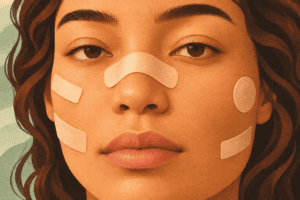
Acne starts inside the hair follicle. Oil glands produce too much sebum, dead skin cells clog the pore, bacteria grow in the blocked follicle, and inflammation turns a clog into a red, tender spot (NIAMS; NHS). Hormones, especially androgens, drive the oil production, which is why acne peaks in puberty and flares around periods, pregnancy and menopause. Genes decide how prone you are.
Everything else, from diet to hair products to stress, is a trigger that can make acne worse in someone who is already prone to it. The good news is that the treatments with the strongest evidence are simple and inexpensive: benzoyl peroxide, a topical retinoid such as adapalene, and, for persistent or severe acne, prescription treatment from a doctor.
The four things that cause a pimple
- Excess oil. Androgens make sebaceous glands larger and more active. This is the main hormonal link.
- Clogged pores. Skin cells lining the follicle stick together instead of shedding, forming a plug. A plug at the surface is a blackhead; a closed one is a whitehead.
- Bacteria. Cutibacterium acnes, a normal skin bacterium, multiplies in the oily, blocked follicle.
- Inflammation. The immune response to the blocked follicle and bacteria creates red papules, pus-filled pustules and, in deeper acne, painful nodules and cysts that can scar.
Each effective treatment targets one or more of these steps, which is why combining two treatments often works better than either alone.
Triggers that can make acne worse
Hormonal changes
Acne is common around periods, in pregnancy and around menopause (NHS). In adult women it often appears on the chin and jawline. Acne together with irregular periods or excess hair growth should be checked by a doctor. Our acne face map guide explains what breakout location can and cannot tell you.
Skin and hair products
Heavy, oily creams, some sunscreens and makeup, and hair oils and pomades can clog pores; the AAD notes that oils in hair products can cause breakouts along the hairline and forehead (AAD). Look for “non-comedogenic” or “won’t clog pores” on the label. Using too many active products at once is another common problem: it irritates the skin and makes it hard to tell what is working.
Friction, pressure and heat
Helmets, chin straps, backpack straps and tight clothing trap heat and sweat and can cause acne mechanica (AAD). Resting your face in your hands does the same on a smaller scale.
Picking and squeezing
Squeezing spots pushes debris deeper, increases inflammation and can leave permanent scars and dark marks (AAD; NHS).
Stress
Many people notice breakouts during stressful periods. Stress does not cause acne by itself, but it is a commonly reported trigger for flares. It is also a time when people tend to pick at their skin more.
Some medicines
Steroids, some hormonal contraceptives and certain other medicines can cause or worsen acne. If you suspect a medicine, talk to your doctor before stopping it.
Does diet cause acne?
Diet does not cause acne on its own, but there is moderate evidence that two kinds of food can make it worse for some people. The AAD’s view is that diet changes can help some people, but “keeping your skin clear requires more than a diet change” (AAD).
High-glycemic foods
Foods that raise blood sugar quickly, such as white bread, sugary drinks, sweets and many processed snacks, have the best evidence. In a 12-week trial of 43 young men, a low-glycemic-load diet reduced acne lesions by about 23.5, compared with about 12 on a usual diet (Smith et al., 2007). The diet group also lost some weight, which may have contributed, and the trial was small. A practical version is to swap refined carbohydrates for whole grains, legumes, vegetables and fruit.
Dairy, especially skim milk
Observational studies link milk with acne. A meta-analysis of 14 studies with about 78,500 people aged 7 to 30 found that any dairy was associated with about 25 percent higher odds of acne, and low-fat or skim milk with about 32 percent higher odds (Juhl et al., 2018). A second meta-analysis found a similar pattern for milk, with no clear link for cheese (Aghasi et al., 2019). These studies show association, not cause, and the authors of the first one noted signs of publication bias. If you suspect milk, try reducing it for a couple of months and see, while making sure you still get enough calcium and vitamin D from other foods.
Chocolate
The evidence is thin. One tiny trial gave 13 men capsules of pure cocoa and saw a short-term rise in lesions (Caperton et al., 2014), but that is far too small to draw firm conclusions. Most chocolate bars are also high in sugar, which brings us back to glycemic load.
What about “foods that fight acne”?
Lists of acne-fighting foods (zinc, omega-3, vitamin A, antioxidants) circulate widely. A balanced diet low in refined sugar is reasonable advice for many reasons, but no single food has good evidence for clearing acne. High-dose vitamin A supplements can be toxic and should not be taken for acne without medical advice.
Myths worth dropping
- “Acne is caused by dirt.” Blackheads are dark because the plug oxidizes, not because of dirt. Scrubbing harder irritates skin and can make acne worse. Washing twice a day with a gentle cleanser is enough.
- “Toothpaste dries out spots.” It contains irritants and can cause redness and peeling. Use a real spot treatment.
- “The sun clears acne.” A tan may hide redness briefly, but sun does not treat acne, many acne treatments make skin more sun-sensitive, and sun darkens post-acne marks.
- “Acne is just a teenage problem.” Many adults, especially women, have acne into their 30s and 40s.
Treatments with the best evidence
The American Academy of Dermatology’s 2024 acne guidelines make strong recommendations for benzoyl peroxide, topical retinoids, topical antibiotics and oral doxycycline, and conditional recommendations for salicylic acid, azelaic acid and some others (Reynolds et al., 2024). Here is how the main options compare.
| Treatment | What it does | Over the counter? | Notes |
|---|---|---|---|
| Benzoyl peroxide | Kills acne bacteria, reduces inflammation | Yes (2.5% to 10%) | Bleaches fabric; start at 2.5% |
| Adapalene 0.1% (a retinoid) | Prevents clogged pores, reduces inflammation | Yes in the US since 2016 | Dryness at first; not in pregnancy |
| Salicylic acid | Loosens dead skin in pores | Yes (up to 2%) | Milder; useful for blackheads |
| Azelaic acid | Reduces bacteria and inflammation; fades dark marks | Prescription strength in the US | Well tolerated |
| Topical antibiotics (e.g., clindamycin) | Reduce bacteria and inflammation | No | Should be paired with benzoyl peroxide |
| Oral antibiotics, hormonal treatments, isotretinoin | Systemic treatment for moderate to severe acne | No | Need a doctor |
Benzoyl peroxide
Benzoyl peroxide kills C. acnes and helps prevent antibiotic resistance when used with antibiotics. Higher is not better: in three double-blind studies, 2.5% reduced inflammatory spots as well as 5% and 10%, with less irritation than 10% (Mills et al., 1986). It bleaches towels, pillowcases and clothes, so use white linens (AAD).
Adapalene
Adapalene 0.1% gel became available over the counter in the US in July 2016 (FDA switch list). As a retinoid, it works on the clogging step that starts every pimple, so it is a good long-term maintenance treatment. Apply a pea-sized amount to the whole area, not just spots, a few nights a week at first, and build up. Expect some dryness and possibly a few weeks of worse skin before it improves. Do not use retinoids if you are pregnant or trying to conceive without medical advice. The FDA’s switch list also shows that a combined adapalene and benzoyl peroxide gel moved to over-the-counter sale in May 2026.
Salicylic acid
Salicylic acid dissolves into oil and loosens the plug inside the pore. Its evidence is weaker than for benzoyl peroxide or retinoids, which is why the AAD’s recommendation is conditional, but it is gentle enough for many people with mild acne and blackheads, often as a cleanser.
Give it time
The AAD notes that it takes at least 6 to 8 weeks to start seeing fewer breakouts (AAD). Most people give up too soon or switch products every week. Pick one or two treatments, use them consistently, and judge after two to three months.
Two label-checked over-the-counter products
We checked these against their US Drug Facts labels on DailyMed. This is label analysis, not hands-on testing.
Neutrogena Stubborn Acne AM Treatment
Active: 2.5% benzoyl peroxide | Format: leave-on gel | Use: thin layer over affected areas
A leave-on gel at 2.5%, the strength that matched higher concentrations for inflammatory spots with less irritation. The base is short and simple: water, a carbomer gel, preservatives and a mild surfactant, with no fragrance listed (DailyMed). The label warns it may bleach hair and fabric.
The Inkey List Salicylic Acid Cleanser
Active: 2% salicylic acid | Format: rinse-off gel cleanser | Also contains: zinc PCA, allantoin, glycerin
A gentle way to add salicylic acid without another leave-on layer. The label lists 2% salicylic acid in a mild surfactant base with glycerin, zinc PCA and allantoin (DailyMed). Because a cleanser is rinsed off within a minute, its effect is modest; it pairs well with a leave-on benzoyl peroxide or adapalene. As the label warns, using several acne products at once makes dryness and irritation more likely.
A simple routine for mild acne
- Morning: gentle cleanser, benzoyl peroxide gel on acne-prone areas, a light non-comedogenic moisturizer, sunscreen.
- Evening: gentle cleanser, adapalene on the whole acne-prone area (start every second or third night), moisturizer.
- Hands off: do not pick, and change pillowcases often.
- Be patient: judge results after 8 to 12 weeks.
If your skin is sensitive, start with only one active product and add the second after a few weeks.
Acne scars and dark marks
Flat red or brown marks left after a spot usually fade on their own over months, faster with sun protection. True scars, the depressed (pitted) or raised kind, are permanent changes in the skin, and the best prevention is treating acne early and not picking.
The AAD lists effective scar treatments as procedures done by a dermatologist: chemical peels, lasers, microneedling, radiofrequency, fillers for depressed scars, and minor surgery. Treatment usually starts once acne is under control. For mild scarring, a retinoid or salicylic acid can make scars less noticeable over time (AAD).
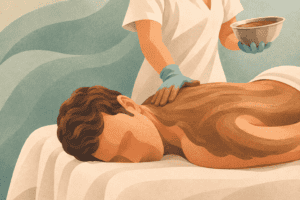
Clay and Dead Sea mud masks do not remove acne scars. They can absorb surface oil and leave skin feeling smoother, but we found no published study showing that Dead Sea mud or minerals improve acne or acne scars. If you enjoy masks, see our comparison of Dead Sea mud masks and clay masks, and for salt see Dead Sea salt for acne. Sulfur is one mineral ingredient with a longer history in acne products; our sulfur for skin guide covers it.
When to see a doctor
The NHS advises seeing a GP if self-care is not helping, if spots are deep, painful or leaving scars, if there are signs of infection, or if acne is affecting your mental health (NHS). Moderate and severe acne usually needs prescription treatment, such as a retinoid with an antibiotic, hormonal treatment for women, or isotretinoin, which the AAD strongly recommends for severe or scarring acne. Starting early is the best way to prevent permanent scars.
FAQ
What is the main cause of acne?
Hormone-driven oil production combined with clogged follicles, acne bacteria and inflammation. Genes decide how prone you are; triggers like diet, products and friction can make it worse.
How can I get rid of acne fast?
There is no overnight fix for acne. A single spot can be calmed with a benzoyl peroxide spot treatment, and a dermatologist can inject a large, painful cyst. Clearing acne overall takes 6 to 8 weeks of consistent treatment.
Does dairy cause acne?
Studies link milk, especially skim milk, with higher odds of acne, but they show association, not proof of cause. Cutting back is worth a trial if you suspect it.
What foods are good for acne?
A diet lower in refined carbohydrates and sugar, built on whole grains, legumes, vegetables and fruit, has the best evidence. No single food clears acne.